It starts with a buzzing, ringing, or humming sound in your ear. You can’t always identify when it started or where it came from, but it’s persistent. You check with your doctor and find a name for what you’ve been experiencing: tinnitus.
Whether you’re experiencing ongoing tinnitus or it shows up intermittently, it can cause a lot of frustration and overwhelm. Luckily, there are things you can do to make it more manageable. One of those interventions is called Pain Reprocessing Therapy (PRT).
If you’re curious, we’ve put together a short explainer that outlines how pain reprocessing techniques can help you manage tinnitus symptoms and how it works in practice.
But before you read on, an important disclaimer: please consult with your doctor to rule out all causes of your tinnitus, especially if it’s new to you or accompanied by dizziness or other symptoms that are new or unexplained.
What is Tinnitus?
Tinnitus is a ringing in the ear that can be distracting, irritating, and for some, very frustrating. It can also occur alongside chronic, persistent pain. This is because the parts of the brain that create pain can create other unwanted sensations, like ringing in the ears. This can lead to tinnitus for those experiencing ongoing pain.
Our brains can block out stimuli that we don’t really need to think about or feel, like background sounds or the clothes on our skin, when we don’t need to focus on them. But tinnitus works a little differently — the sound isn’t really there, so it’s more difficult for our brain to block out.
It can be very stressful. If you’re spending a lot of time asking yourself, “Where did this ringing come from? Will it ever stop? Is there an underlying cause I don’t know about?”, you’re not alone. Many find themselves worried about their tinnitus and very focused on how they can get rid of it for good.
Pain Reprocessing Therapy and Tinnitus
If you haven’t heard of it before, Pain Reprocessing Therapy (or PRT) is a diverse intervention that can be used for any unwanted sensation — not just pain. This can include numbness, itchiness, ticklishness, and tingling. It also includes ringing in your ears, aka tinnitus.
Pain Reprocessing Therapy helps you understand how your brain processes pain and uncomfortable physical sensations. Once you understand your tinnitus and how it functions, you can teach your brain to feel less threatened or worried by it. Using PRT techniques, your brain can reprocess sensations so you feel safe when they come up and know how to move through the discomfort.
How Pain Reprocessing Therapy Can Help with Tinnitus
If you start working with a PRT-trained practitioner to help with your tinnitus, here’s what it might look like:
- Understanding how you feel about tinnitus. You’ll take a look at how your tinnitus makes you feel and why. Does it scare you? Does it remind you of something you experienced in the past, like a concussion or a stroke? Are you worried that you can’t do your job when it comes up?
- Observing how you currently mitigate the tinnitus. What works and what doesn’t work?
- Thinking about how you can take care of yourself. Giving yourself the right care and attention teaches your brain something important: you are safe, so your brain doesn’t need to produce the tinnitus at the same volume.
- Consider when your symptoms are most intense. How can you step back from some (not all) of the things that lead to increased symptoms?
- Pacing yourself: Once you start to feel ‘better’, you need to pace yourself and build back up to previous routines and activities. Think of yourself like a runner: if you hurt your ankle, you would slowly build your strength back up before tackling a full marathon again. PRT works the same way.
- Being with the sensation: You’ll practice being with the sounds and learning not to be afraid of them. What does it feel like to approach tinnitus with curiosity, instead?
Try This Exercise
To get a taste of what PRT exercises for your tinnitus might look like, try this exercise to see if it works for you.
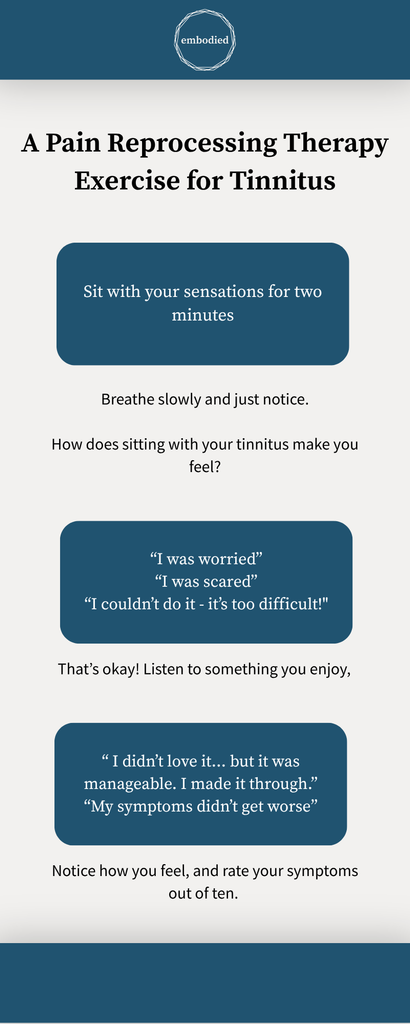
Sit quietly and just notice the sound or any other sensations that accompany the tinnitus for 2 minutes. Breathe slowly and just notice.
How did that feel?
If you’re feeling overwhelmed, you become upset, or you can’t focus on it without feeling pain, anxiety, or wanting to yell at the wall… that’s okay! Put on something pleasant that you like to listen to for at least 2 minutes.
After two minutes, rate your symptoms out of ten.
- If your symptoms were a 7 or above, it’s okay to take a step back. Listen to some nice music or something soothing you enjoy.
- If your symptoms were between a 4 and a 6, practice sitting with the feeling as long as it’s not getting worse. If you start getting annoyed or anxious, try again later.
- If you’re a 3 or below, keep practicing to help your body get used to the sensations.
When you work with a PRT practitioner, they’ll take you through exercises like this that help you learn to sit with the sensations and, over time, feel less anxiety and stress associated with your symptoms.
Get Support with Tinnitus
If you’d like to book a session with us, you can book on Janeapp here. And if you have questions, feel free to reach out to info@embodiedphysiopilates.com. We’re here to support you!